.png)

%20(1).png)
What if your team woke up on a Monday excited to check Slack because they knew a tiny, fun ritual would make their week better?
I want to show you how to improve morale in a team and why that outcome is closer than you think.
If you follow my advice, you’ll start to notice a shift in your office atmosphere by next week.
The best part is that you can achieve this without planning a single logistics-heavy event or spending hours in "forced fun" brainstorming sessions.
Here's what we know:
I was recently talking with a Director of Operations who felt like she was shouting into a void.
She wanted a team that collaborated instinctively, but she felt buried under spreadsheets and didn't have the "bandwidth for culture."
I told her that the vibrant, connected culture she wants is actually the natural default when people have a low-stakes reason to laugh together.
We looked at her calendar and realized she could implement a system today that runs on autopilot, requiring zero minutes of her weekly schedule while giving her team a consistent ritual to bond over.
If this sounds like what you’re looking for, take it as a clear signal that you are ready to move beyond simply learning how to improve morale in a team. It's time for you test out some strategies. That means starting your four-week free trial of Water Cooler Trivia.
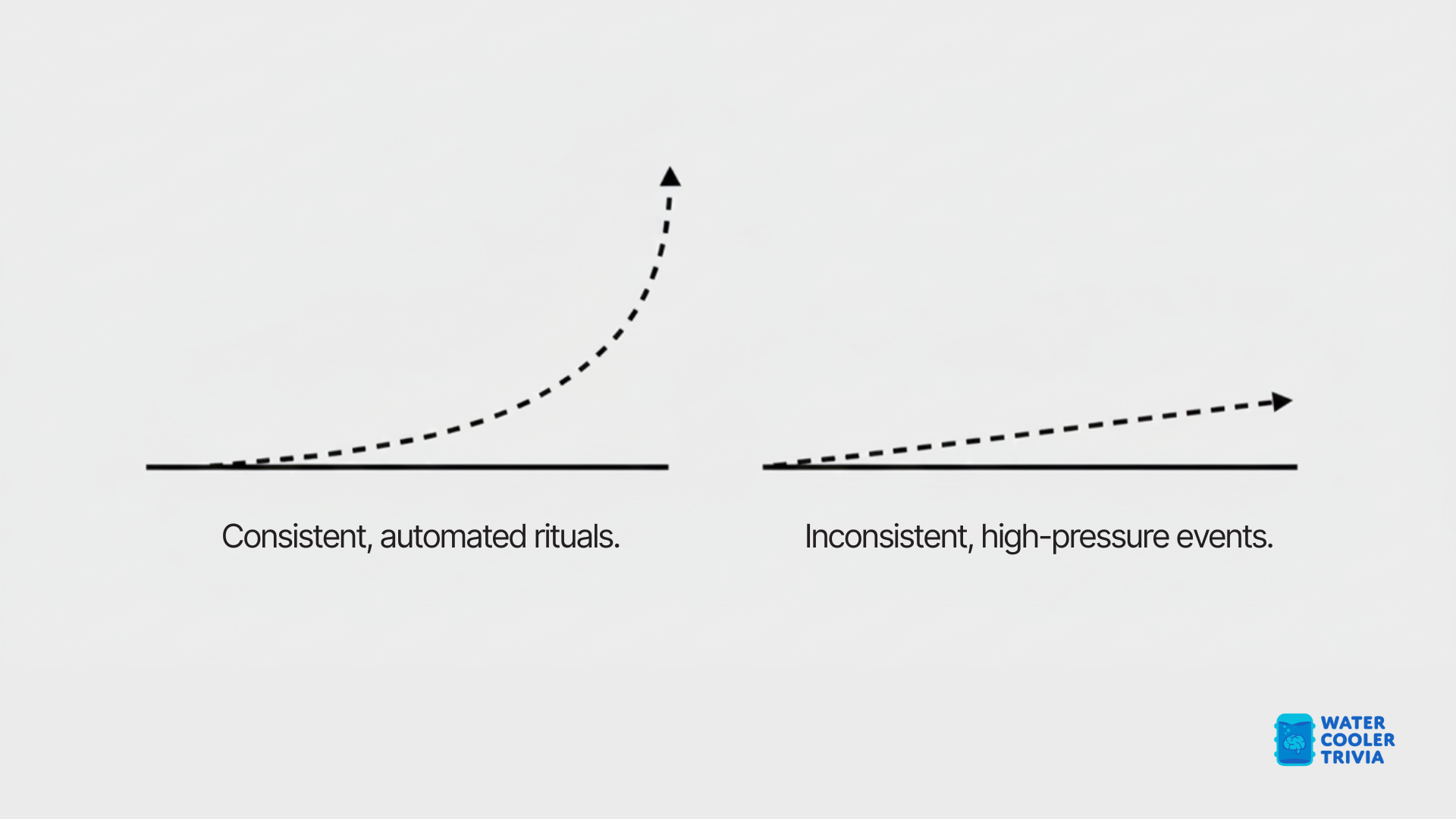
I’m often surprised by how many leaders still lean on outdated, high-pressure tactics that drive a wedge between management and staff.
What we’ve seen is that "forced" morale often has the opposite effect. It creates a sense of resentment rather than community.
Here’s what you should avoid:
I'm not a fan of these.
So, what’s actually working for leaders and managers when it comes to improving team morale?
As the Chief Trivia Officer of Water Cooler Trivia, I built this platform because I saw the gap between "wanting a great culture" and "having the time to build one." We now serve over 1,200 groups, from small startups to giants like Nike and Amazon, because we solved the most difficult part of the equation: consistency.
Most staff wellbeing ideas fail because they require a "champion" to run them. When that person gets busy, the culture dies. Water Cooler Trivia is a "set and forget" solution. We deliver professional, handwritten trivia directly into your Slack, Microsoft Teams, or email. Your team gets ten questions and a tiebreaker. They play asynchronously, which is vital for the modern hybrid world.
We focus on the "fun" rather than the "IQ." Our quizzes are designed to spark conversation, featuring "emoji superlatives" and shout-outs for the funniest wrong answers. This avoids "trivia shaming" and instead creates a space where personality shines. It is one of those team morale boosters that people actually want to participate in because it takes five minutes and provides a week’s worth of inside jokes.
Whether you need icebreakers for work or want to spice up your team meeting ideas, our platform scales with you. We asked 1.4 million questions last year alone, and the data is clear: people want to feel known by their peers. By letting employees filter out US-centric questions and choose categories like pop culture or science, we make the experience inclusive for everyone, everywhere.
Think back to that Director of Operations I mentioned earlier. Within three weeks of using our automated trivia, she messaged me to say that her Slack channel had come alive. People who had never spoken to one another were debating whether a hot dog is a sandwich or laughing over a shared love of 90s nostalgia. She didn't have to plan a thing; she just got to enjoy the results.
.png)
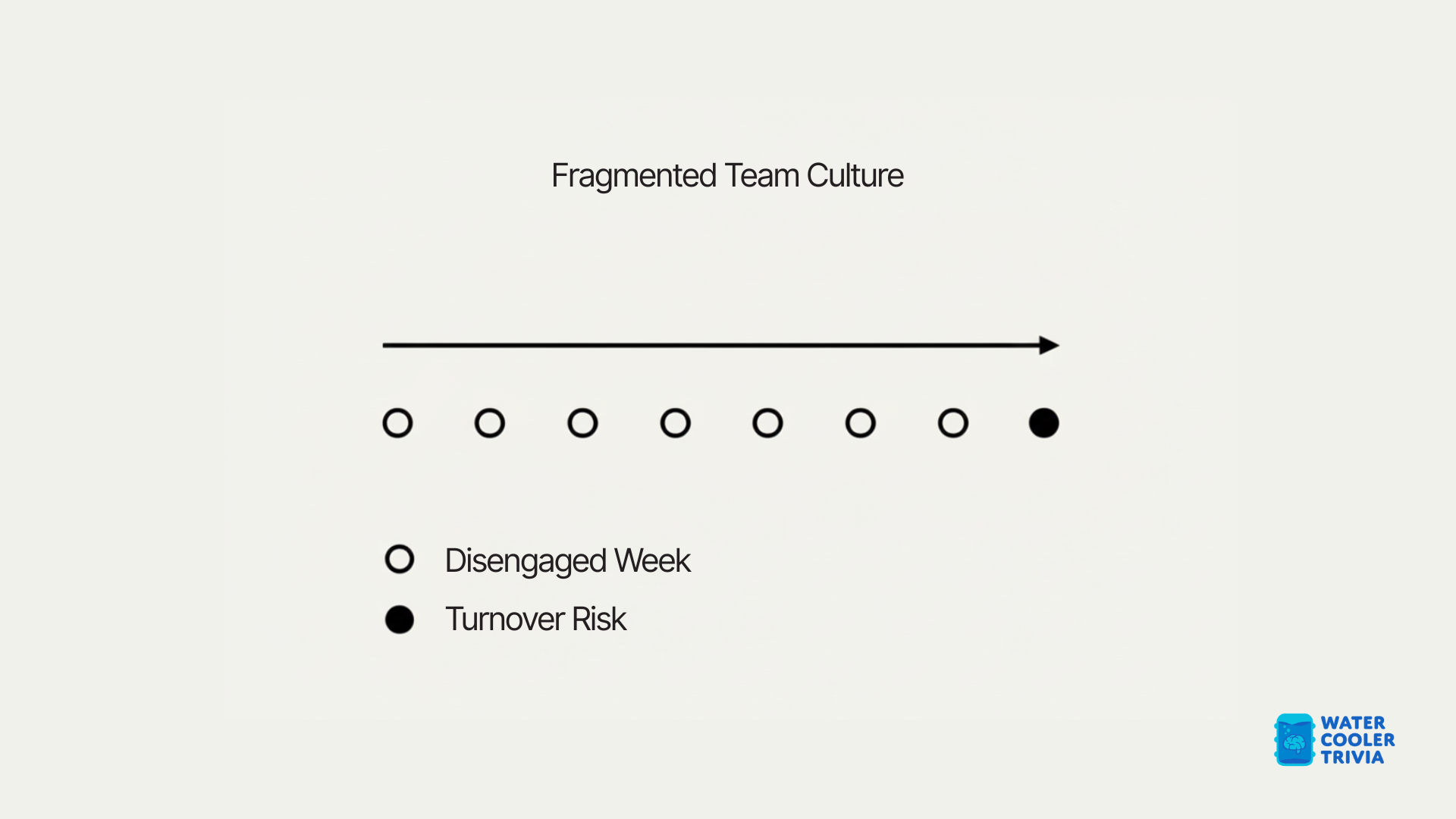
If you are looking for team communication games that don't feel like homework, or if you are already dreading the logistics of office Christmas party games, it is time to pivot. The cost of a disengaged team is far higher than the dollar-per-user price of a trivia subscription. In fact, you only pay for the people who actually choose to play, making this the most low-risk, high-reward investment you can make in your people.
The roadmap for 2026 is clear. You can continue to struggle with "forced fun," or you can lean into a ritual that 1,200 teams already swear by.
Start your four-week free trial today and watch how quickly the energy in your "room" changes. Would you rather spend 2026 worrying about turnover, or would you rather spend it laughing with a team that actually likes working together? The choice is yours.